
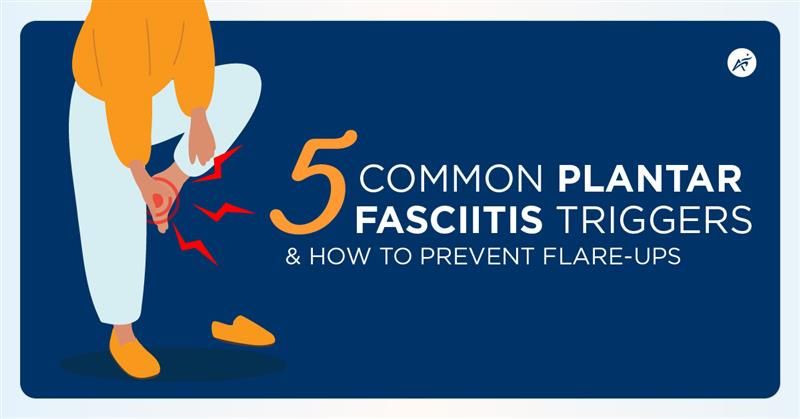
Ever feel an ache in your foot when you get out of bed in the morning or perhaps a sharp, stabbing pain in your heel when taking an evening stroll? If so, you may have a condition known as plantar fasciitis .
The average person spends 56% of their day standing or walking, putting a lot of pressure on the bottoms of their feet. Along the bottom of each foot is the plantar fascia, a strong, thick band of fibrous tissue that forms the arch and connects the heel bone to the toes. Plantar fasciitis occurs when the tissue becomes inflamed, which can cause stiffness, swelling, and foot pain primarily in the heel and arch. While most experience pain in one foot, it can affect both feet at the same time.
Plantar fasciitis is the most common cause of heel pain. In fact, according to the Cleveland Clinic, 1 in 10 people will develop plantar fasciitis within their lifetime. Currently there are more than 2 million people treated for plantar fasciitis pain in the U.S. every year.
What Are the Five Most Common Causes of Plantar Fasciitis?
There are many factors that may cause plantar fasciitis, and some cases develop without an identifiable reason. Here are the five most common triggers that may put you at risk:
- Repetitive strain and overuse: Playing high-impact sports, such as basketball or soccer, requires jumping and sudden directional change. This puts significant force on the heel and stretches the plantar fascia leading to micro-tears. Repetitive activity such as standing all day or running significant distances can cause irritation to the tissue, resulting in inflammation or swelling.
- Improper footwear: Worn out shoes may intensify foot pain by offering inadequate support of the arch or lack cushioning that puts strain on the heel. Wearing no shoes at all poses even more problems as bare feet provide no shock absorption or support, especially when walking on hard surfaces.
- Foot anatomy: High arches or flat feet can affect your walking gait and distribute weight improperly. High arches may place more weight on the heels causing heel bone pain, while flat feet may distribute more weight on the plantar fascia leading to excess strain.
- Weight-bearing: Carrying too much weight or increasing body weight by more than 15 pounds in one month can put extra strain on the plantar fascia by weakening the muscles and tendons.
- Tight or weak calf muscles: Tight calf muscles restrict the ankle’s range of motion and can pull the heel bone up. This limited flexibility increases tension on the plantar fascia. Weak calf muscles do not provide the proper shock absorption they are designed for, which impacts forces on the feet.
Tips for Plantar Fasciitis Prevention
Staying active is key to a healthy lifestyle, and some of the triggers above cannot be avoided such as foot structure or continuing to enjoy your favorite sports. Fortunately, there are ways to lower your risk for flare-ups while still maintaining the life that you love.
- If your arches are high, your foot cannot absorb impact very well. Wear shoes with extra cushioning in the midsole to maintain foot alignment and a deep heel cup to stabilize the heel. A shoe with plenty of room in the toe box is ideal as people with high arches tend to put excess pressure on the front of the foot.
- If your feet are flat, wear shoes with a slightly raised heel to alleviate pressure of the mid-sole. Identical to the needs of a high arched foot, a flat foot requires extra support in the mid-sole with firm cushioning to help absorb shock, and shoes that stabilize and enclose the heel to keep it in contact with the sole of the shoe at all times.
- Whether you have high arches or flat feet, avoid flip-flops or sandals that offer no arch or heel support.
- Do not walk barefoot on hard surfaces.
- The tissue of your feet had very limited cushioning tissue as a fat pad along the sole of your foot is the only barrier that guards your plantar fascia. A thin structure, the pad can easily wear out, causing the fascia to flatten and tear. When possible, always opt for shoes to protect the feet from hard surfaces.
- Gently stretch your toes, feet, and calves regularly before and after exercise or activity to minimize foot pain. Here are a few examples:
- Toe Curls:
- While seated in a chair, place a small towel on the floor in front of your feet.
- Using the affected foot, grab the towel using only your toes and bring it towards you. Once the towel is near, relax your toes.
- Try to repeat 10 times once or twice each day.
- Seated foot stretch:
- While seated in a chair, cross the affected heel over the knee of your other leg.
- Hold your ankle with one hand while holding your toes with the other hand.
- Slowly pull your toes towards your shin. You should feel a stretch in the arch.
- Hold this position for 30 seconds and try to repeat 2-3 times each day.
- Standing calf stretch:
- While standing, lean your hands against a wall for support.
- Straighten the leg of the affected foot ensuring your knee is straight and bend your other knee while shifting towards the wall.
- Make sure to keep both feet completely flat against the ground.
- As your knee is bent, hold the position for 45 seconds. You should feel the stretch in the calf of your affected foot.
- Repeat stretch multiple times throughout the day. The best way to prevent plantar fasciitis is to avoid putting too much pressure on your feet without allowing time for recovery.
- Listen to your body and give yourself a time-out from sports or activities. Schedule days to rest your calves and feet so the plantar fascia does not become strained or inflamed.
- If you are unable to rest your feet because your job requires standing or walking all day, try to take frequent breaks, wear the proper shoes based on your foot anatomy, and be sure to perform stretches at home.
*Disclaimer: Always consult with your doctor before starting any exercise program. If you experience any numbness, tingling, or reproduction of your symptoms, stop this exercise and please contact your doctor.
With Preventative Care, Plantar Fasciitis Flare-ups Can Take a Hike
There are many ways to prevent plantar fasciitis, but if you still have heel or foot pain that doesn’t improve on its own within one week, it may be time to see a healthcare provider. Airrosti Providers are highly trained to treat plantar fasciitis through manual therapy and exercises to strengthen weak and tight muscles directly at its source.
Our Providers can determine the root cause of your pain and will create a personalized treatment plan to get you back to the activities you love. We offer in-clinic and telehealth appointments. Schedule below or call us at (800) 404-6050 for more information!
Read our Medical Disclaimer here.
Questions? Reach Out to Learn More About how Airrosti can help you
If you have additional questions or would like to learn more about our appointments, call us at (800) 404-6050 for more information.