Our virtual care option, Airrosti Remote Recovery is available nationwide.
4.94 stars on Google (across 150+ locations)
*based on patient-reported outcomes; 94% reported significant improvement in their injury
“I was originally told that I would have to take pain injections and eventually get surgery for my back pain. But with Airrosti, I saved so much time and money! I will 100% go back to them for any other pain I have and recommend them to everyone!”
2026 | Kylie Gray
Accurate Diagnosis to find the underlying cause of your pain.
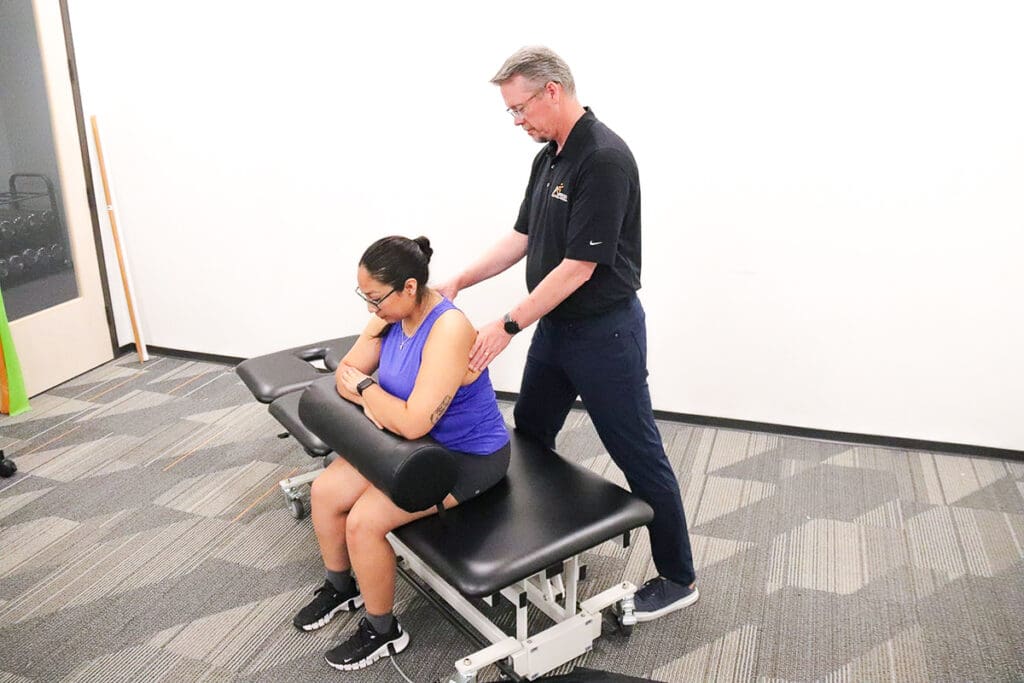
Targeted Manual Therapy: we use myofascial release to quickly reduce pain in your first visit.
Active Recovery Plan: customized exercises help you heal faster and prevent the pain from returning.
Most patients see resolution in an average of 3-4 visits over a 2-week period*.
Other treatments focus on managing symptoms, but Airrosti focuses on eliminating the underlying problem.
Upper back pain can have several causes, and therefore, present itself differently case by case. Common causes include:
Often due to repetitive movements or overexertion, and commonly seen in athletes.
Direct impacts from accidents or falls can damage the spine, bones, muscles, or ligaments in your back, potentially causing upper left back pain or upper right back pain.
Conditions like osteoarthritis or degenerative disc disease can gradually wear down spinal discs and joints, leading to pain or discomfort.
Slouching or hunching, common among desk workers and those with sedentary lifestyles, can strain the upper back. Moreover, standing with poor posture for extended periods can worsen these issues, and may lead to back pain when standing.
This condition occurs when the spaces within your spine narrow, putting pressure on the nerves that travel through the spine. It can result in pain, numbness, or muscle weakness in the upper back and extremities.
Other causes of upper back pain include Upper Cross Syndrome, a muscle imbalance leading to pain and muscle weakness, and scoliosis, an abnormal spinal curvature that can cause discomfort.
Symptoms of upper back pain depend on the type of injury or condition you may be experiencing.
Common symptoms of upper back pain include:
• Aching or throbbing pain
• Sharp or stabbing sensations
• Muscle tightness and tension
• Tingling or numbness that extends from your upper back to your shoulders and arms
• Pain that radiates down your back, possibly indicating a pinched nerve
Similar to upper back pain, middle back pain shares many common symptoms, including:
• Tightness or stiffness in the joints or muscles
• Muscle aches
• Sharp, aching pain
Pain in the middle of your back may share similar causes to upper or lower back pain, such as a muscle strain or sprain from poor form when working out or lifting objects, a direct injury from a fall or accident, or a herniated disc. Other causes or factors can be poor posture, osteoarthritis, or aging.
You should always consult with a healthcare professional to determine the cause of back pain, regardless of its location.
Back pain can stem from several causes, such as an injury, health condition, or lifestyle factors, and develop into a chronic condition over time, lasting months or even years.
Chronic back pain can cause long-term restrictions in your overall mobility and quality of life.
Still have questions or concerns about your back pain? Schedule a no-cost video chat with one of our Providers.
Surgery is not always necessary for mid and upper back pain. In many cases, conservative treatments such as rest, physical therapy, Airrosti care, medication, and lifestyle modifications can effectively manage symptoms and improve mid back function. Surgery may be considered if conservative treatments fail to provide relief, or if there is evidence of structural issues such as spinal instability or compression of nerves that require surgical intervention. It’s important to discuss all treatment options with a healthcare professional to determine the best course of action.

It’s generally safe to take medications for mid and upper back pain, but it’s important to use them as directed by your healthcare provider. Over-the-counter pain relievers such as acetaminophen or nonsteroidal anti-inflammatory drugs (NSAIDs) can help reduce inflammation and alleviate discomfort. Prescription medications such as muscle relaxants or corticosteroids may be recommended for more severe cases of mid back pain. It’s important to consult with a healthcare professional before starting any new medication regimen, especially if you have underlying health conditions or are taking other medications.
Yes, there are several self-care techniques and exercises that can help alleviate mid and upper back pain. These may include gentle stretching exercises to improve flexibility, strengthening exercises to support the spine and core muscles, and postural correction techniques to maintain proper alignment of the spine. Additionally, applying heat or ice to the affected area, using ergonomic furniture and workspace setups, and practicing stress-reduction techniques such as deep breathing or meditation can help alleviate muscle tension and discomfort.
While it’s important to avoid activities that exacerbate back pain, completely restricting all activity may not be necessary. Modifying activities to reduce strain on the mid back and incorporating rest breaks can help alleviate symptoms. Low-impact exercises such as walking, swimming, or yoga can be beneficial for maintaining mobility and promoting healing without putting excessive strain on the mid back. However, if mid back pain persists or worsens with activity, it’s important to consult with a healthcare professional for proper evaluation and guidance on activity modification.
Five stars truly don’t capture what Dr. Andy Pichardo and Airrosti Southtown have meant to me. I started seeing Dr. Pichardo in 2025 when extreme back pain had taken away so much of my normal life. Working out and running had always been important to me, and suddenly I couldn’t do either. More than the physical pain, it was difficult watching my world become smaller because I simply couldn’t move the way I used to. Dr. Pichardo quickly helped me make progress. I was able to return to working out and, although lingering disc issues kept me from returning to running, I could move again. I could get out of the house, be active, and start feeling like myself again. I honestly felt like he helped give me part of my life back. When I moved ... + show morefrom San Antonio to Easton, Pennsylvania, I was genuinely sad to leave his care. What says even more about Andy as a person is that he continued checking in to see how I was doing. Recently, I returned to San Antonio for a month, and one of the first appointments I made was with Dr. Pichardo. I worked with him twice a week throughout my time home, and once again saw improvements in my movement and a reduction in the pain and discomfort I had been experiencing. There is something incredibly meaningful about finding a provider who understands that the goal isn’t simply reducing pain—it’s helping someone get back to living. Dr. Pichardo gave me knowledge, encouragement, mobility, and confidence when I desperately needed all four. I can’t fully express what it has meant to regain movement and, with it, some of the happiness and independence that pain had slowly taken away. I will always be grateful for the impact Dr. Pichardo has had on my quality of life. If I could pack up Airrosti Southtown and bring him to Pennsylvania with me, I absolutely would. Since I can’t, I know that whenever life brings me back home to SATX, I’ll find my way back to his office. Making time to see Dr. Pichardo won’t just be another appointment on the calendar—it will be part of coming home and reconnecting with someone who played such an important role in helping me find movement, confidence, and happiness again. An exceptional doctor, an exceptional human being, and someone I will always be grateful crossed my path. Five stars will never feel like quite enough.
by Benjamin Perales
We offer both in-clinic and telehealth appointments to best suit your needs.
Reviewed by Casey Crisp, Doctor of Chiropractic
Disclaimer: Always consult with your doctor before starting any exercise program. If you experience any numbness, tingling or reproduction of your symptoms, please contact your doctor.
We use cookies to improve your experience, analyze usage, and support our services. By clicking “Accept”, you consent to our use of cookies. You can manage your cookie and data usage settings through the Manage Preferences link below.
© Copyrights Airrosti Rehab Center, LLC 2024. All rights reserved. | Privacy Policy | Standards & Practices | Terms of Use & Service | HIPAA Notice of Privacy Practices | Disclaimer | Equal Opportunity Employer | Notice of Non-Discrimination
“Airrosti” is the registered tradename used for Airrosti Rehab Centers, LLC and its various subsidiary and affiliated entities, which provide musculoskeletal treatment services. Airrosti providers are doctors of chiropractic or doctors of physical therapy.
Book your 15-minute, NO COST video chat with a Provider to learn about your injury and treatment options. Click here to Schedule